
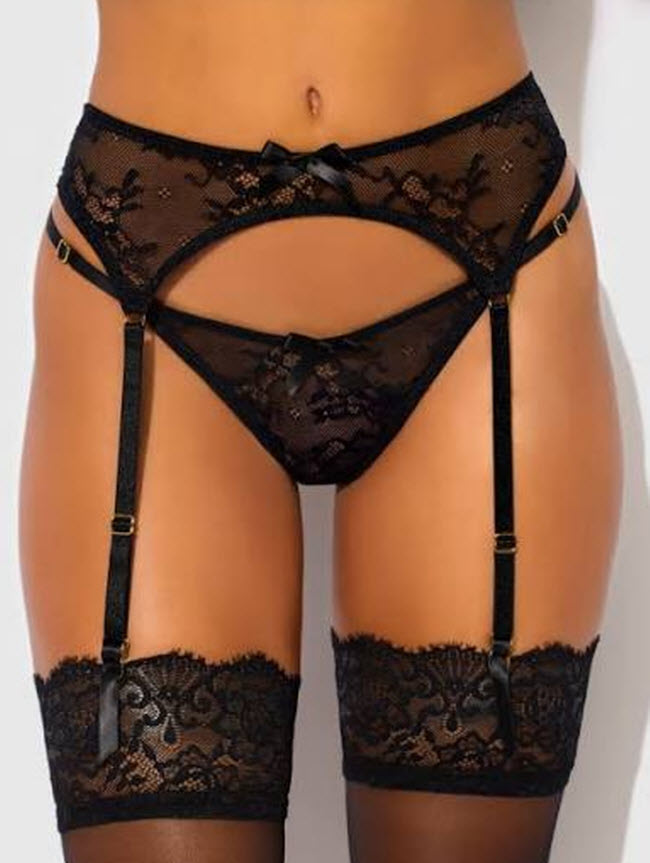
A garter belt, also known as a suspender belt, is a type of women’s lingerie worn around the waist or hips, usually over or above the panties. It features several attached straps with clips that hold stockings in place, preventing them from slipping down the legs. Garter belts are available in a wide range of designs, from simple everyday styles to elaborate lingerie pieces made with lace, satin, mesh, and decorative details. They can be worn as part of a lingerie set with a matching bra and panties, or paired with stockings for a classic look.
History
Garter belts developed from earlier methods of keeping stockings in place. Before modern elastic hosiery became widely available, stockings were commonly secured with garters tied or fastened around the leg. During the late nineteenth and early twentieth centuries, changes in women’s clothing and underwear encouraged the development of more practical ways to support stockings.
As women’s fashions evolved and hemlines became shorter, the garter belt emerged as a useful alternative to older stocking-support methods. It became particularly associated with lingerie during the twentieth century, combining practical function with decorative design. Although pantyhose and self-supporting stockings later offered other options, garter belts remained popular for their distinctive appearance and their place in traditional lingerie fashion.
Garter Belt Styles
Modern garter belts come in different designs, depending on the level of support, appearance, and intended use. Some are designed for everyday wear, while others focus on decorative details and coordinated lingerie styling. Common styles include:
Traditional Garter Belt
A traditional garter belt sits around the waist or hips and uses adjustable straps with clips to secure stockings. It may be made from satin, lace, mesh, or elastic fabric and is often designed to coordinate with a bra and panties.
Wide Garter Belt
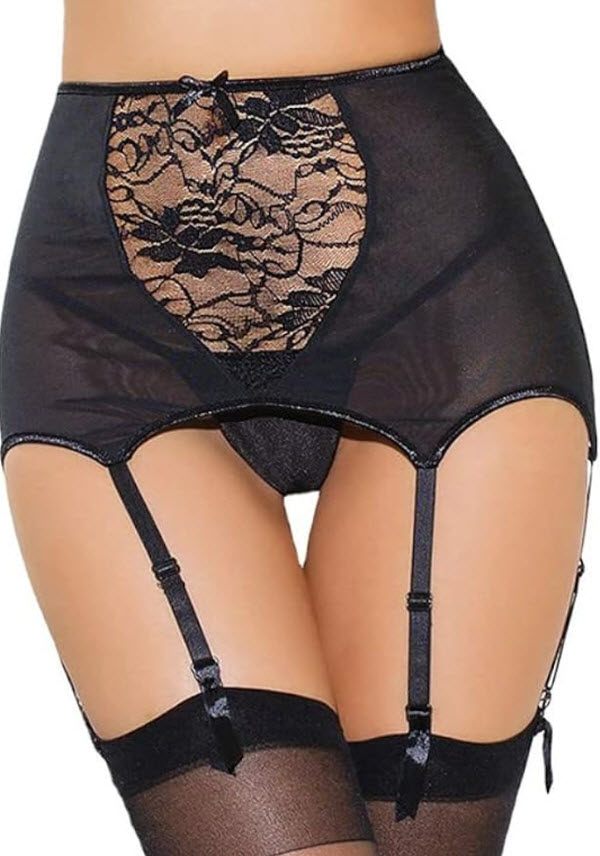
A wide garter belt has a broader band that covers more of the waist or lower abdomen. Its wider construction can provide a more substantial feel and create a smooth, structured appearance beneath clothing. Some designs include decorative panels or light shaping features.
High-Waisted Garter Belt
A high-waisted garter belt extends higher over the waist than a standard design. It may feature lace panels, satin sections, or sheer mesh, combining stocking support with a distinctive lingerie silhouette.
Open-Cup or Open-Front Garter Belt
Some fashion-oriented designs feature open sections or decorative cut-outs at the front. These details are primarily aesthetic and vary considerably between styles. The stocking straps remain the main functional feature of the garment.
Six-Strap Garter Belt
A six-strap garter belt typically has three stocking straps on each side, helping distribute the attachment points across the front and back of the legs. The number and placement of straps vary by design, and some models include four or more attachment points.
Fashion Garter Belt
Fashion garter belts emphasize appearance through details such as embroidered lace, bows, satin ribbons, decorative hardware, contrasting fabrics, or sheer panels. They are often sold as part of matching lingerie sets and may be designed for special occasions or fashion styling.
How to Wear a Garter Belt
A garter belt is generally worn around the waist or hips, with its straps adjusted to the desired length. Stockings are attached to the clips at the ends of the straps, which help keep them in place. The clips should be fastened securely without pulling excessively on the stocking fabric. For a coordinated look, a garter belt can be paired with matching panties, a bra, and stockings. Choosing the correct fit and adjusting the straps evenly can improve comfort and help the stockings remain in position.
Garter Belt vs. Garter
The terms are related but refer to different items. A garter belt is worn around the waist or hips and has straps that attach to stockings. A garter traditionally refers to a band worn around the leg to help hold a stocking in place. The terms can sometimes be used differently in fashion and retail descriptions, so product details are useful when choosing between them.